

Fall driving in Medford, Ashland, and across the Rogue Valley can change quickly from one day to the next. Cooler mornings, shorter daylight hours, wet leaves, fog, and the return of steady rain all affect visibility, traction, and stopping distance. A little preparation now can help make the transition into winter much easier.
What changes when fall arrives in Southern Oregon?
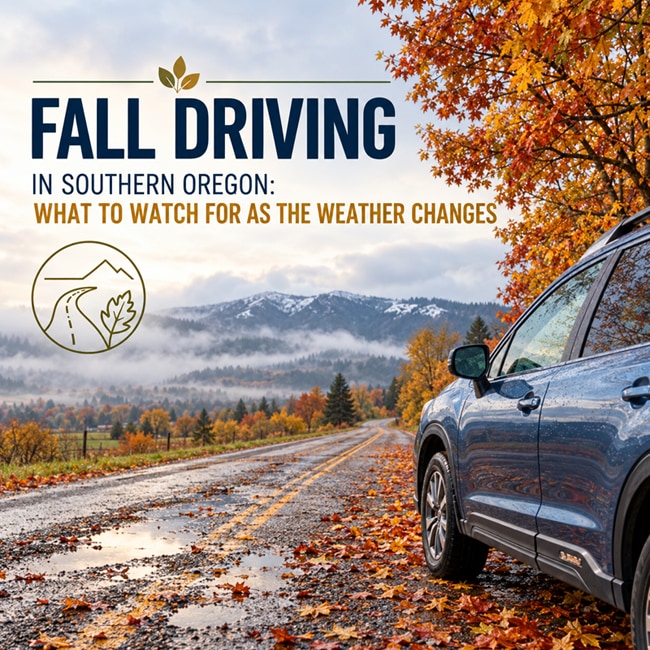
As temperatures drop, roads stay damp longer in the morning and evening. Leaves can collect along curbs and shaded roads, creating slick surfaces, while fog and earlier sunsets reduce visibility. Drivers heading toward higher elevations may also encounter colder temperatures and changing conditions well before winter officially begins.
What should I watch for on Southern Oregon roads?
- Wet leaves that can reduce traction
- Morning fog in the Rogue Valley and surrounding areas
- Earlier sunsets and reduced visibility during evening commutes
- Standing water during the first heavier fall rains
- Wildlife activity, especially around dawn and dusk
- Colder conditions and possible frost at higher elevations
How does fall weather affect my vehicle?
Cooler temperatures can lower tire pressure and make existing tire wear more noticeable. Wiper blades that worked well through summer may struggle once regular rain returns, and shorter days make properly functioning headlights even more important. Fall is also a good time to check brakes, tires, fluids, and your battery before colder weather arrives.
Why this matters in Southern Oregon
Driving conditions in Southern Oregon can vary significantly over a relatively short distance. Roads may be clear and dry in Medford while fog, rain, frost, or colder temperatures are affecting routes toward Ashland, Jacksonville, Grants Pass, or the surrounding mountains. Staying aware of changing conditions can make a big difference this time of year.
What should I check before winter arrives?
- Tire tread depth and tire pressure
- Windshield wipers and washer fluid
- Headlights, brake lights, and turn signals
- Brake condition
- Battery performance
- Heating and defrost systems
FAQs
Are wet leaves dangerous to drive on?
Yes. Wet leaves can reduce traction, especially while braking or turning. Slow down, increase following distance, and avoid sudden steering or braking when leaves are covering the roadway.
Why does my tire pressure drop in the fall?
Air pressure decreases as temperatures fall. Even a healthy tire can lose pressure when the weather turns colder, so fall is a good time to check all four tires and adjust them to the recommended pressure.
When should I start preparing for winter driving?
Fall is the best time to prepare. Checking tires, brakes, wipers, lights, battery condition, and other key systems before colder weather arrives can help prevent problems later in the season.
Schedule a fall inspection with our service team and keep your Subaru ready for the changing Southern Oregon weather.