
Winter Driving in Southern Oregon: Be Ready for Changing Road Conditions
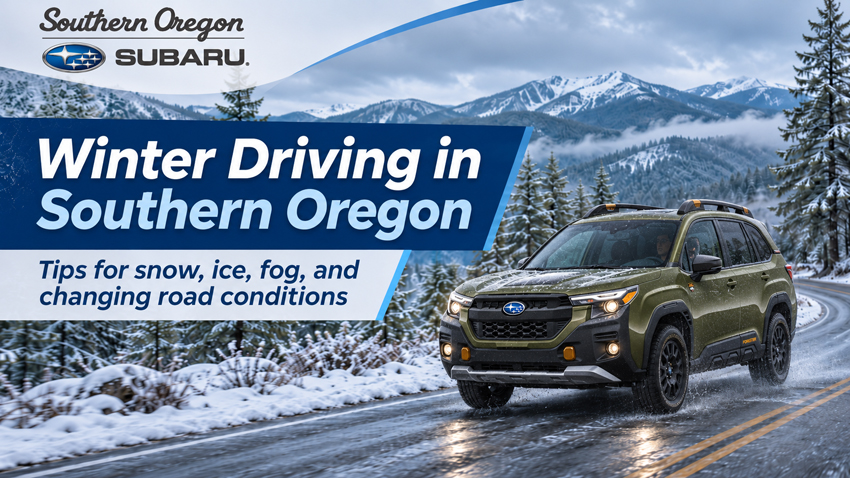
Winter driving in Medford, Ashland, and throughout the Rogue Valley can bring everything from cold rain and dense fog to freezing temperatures, black ice, and mountain snow. Roads that are clear in town may look very different just a short drive away, especially when traveling toward higher elevations.
Whether you're commuting across the valley, heading over Siskiyou Pass, or planning a winter adventure in the Cascades, a little preparation and an understanding of changing road conditions can help make every trip safer.
What makes winter driving in Southern Oregon different?
Southern Oregon's varied terrain creates a wide range of winter driving conditions. Lower elevations may experience rain and fog while nearby mountain roads are covered in snow or ice.
A drive from Medford toward Ashland, Grants Pass, Prospect, or Crater Lake can involve significant changes in temperature, visibility, and traction. Even familiar roads can become hazardous when temperatures drop overnight.
What should I watch for on Southern Oregon roads?
- Black ice: Thin, nearly invisible ice can develop on bridges, overpasses, shaded curves, and roads that remain damp overnight.
- Freezing fog: Fog can reduce visibility while moisture freezes on cold road surfaces.
- Mountain snow: Routes such as Interstate 5 over Siskiyou Pass and Highway 62 toward Crater Lake can experience significant snowfall and changing traction requirements.
- Heavy rain and standing water: Winter storms may create puddles, reduced visibility, and hydroplaning hazards.
- Shorter daylight hours: More commuting takes place in darkness, making clear windows and properly functioning lights especially important.
- Wildlife: Deer and other animals remain a concern, particularly around dawn and dusk.
How can I drive more safely in snow and ice?
Winter driving requires patience, smooth vehicle control, and additional space between vehicles.
- Reduce your speed before approaching curves, intersections, and downhill grades.
- Increase following distance to allow more room for braking.
- Accelerate and steer gently to avoid sudden changes in traction.
- Avoid using cruise control on snowy, icy, or slippery roads.
- Clear snow, ice, and condensation from windows, mirrors, lights, and the roof before driving.
- Watch carefully for shaded pavement, bridges, and overpasses that may freeze before surrounding roads.
- Check current weather forecasts and road conditions before traveling into the mountains.
Remember: All-wheel drive can help you get moving, but it does not eliminate the need for proper tires, cautious speeds, or longer stopping distances.
How does Subaru Symmetrical All-Wheel Drive help in winter?
One of Subaru's most recognized features is Symmetrical All-Wheel Drive, standard on most Subaru models.
Unlike a conventional two-wheel-drive system, Subaru Symmetrical AWD distributes power to all four wheels and can adjust that distribution to help maintain traction as conditions change.
For Southern Oregon drivers, that can be especially useful when traveling on wet pavement, climbing snowy mountain roads, or encountering changing traction conditions.
Many Subaru models also offer X-MODE, which adjusts vehicle systems to help manage traction in certain low-grip situations. Depending on the model, X-MODE may provide additional assistance on snowy or slippery surfaces and during controlled descents.
However, neither AWD nor X-MODE can overcome the physical limitations of tires or make unsafe road conditions safe. Proper winter tires, vehicle maintenance, and responsible driving remain essential.
Do I need winter tires or chains on my Subaru?
That depends on road conditions, posted requirements, and your vehicle's equipment.
Oregon has specific chain and traction tire regulations. Qualifying all-wheel-drive vehicles may be exempt from installing chains under certain conditions, but the exemption has requirements, including carrying chains. During severe winter weather, chains may be required on all vehicles.
Not every tire advertised as all-season meets Oregon's definition of a traction tire. Winter tires designed for severe snow conditions can provide important traction benefits.
Before heading into snow country:
- Check tire condition, tread depth, and inflation pressure.
- Review your Subaru owner's manual for approved traction devices and installation restrictions.
- Carry appropriate traction equipment when required.
- Follow posted chain requirements and road closures.
- Visit Oregon TripCheck for current highway conditions.
What should I check on my Subaru before winter?
Cold temperatures place additional demands on several important vehicle systems. A winter inspection can help identify maintenance needs before they become inconvenient or potentially dangerous.
- Tires: Check tread depth, inflation pressure, and suitability for expected winter conditions.
- Battery: Cold weather can expose a weakening battery, making reliable starting more difficult.
- Brakes: Properly functioning brakes are especially important when roads are slippery.
- Windshield wipers: Worn blades can struggle with winter rain, snow, and road spray.
- Washer fluid: Use fluid suitable for expected freezing temperatures.
- Heating and defrost systems: Clear windows are essential for good visibility.
- Lights: Check headlights, brake lights, turn signals, and fog lights if equipped.
- Coolant: Make sure the cooling system has the proper antifreeze protection.
What should I keep in my vehicle during winter?
A few additional supplies can make an unexpected delay or winter road closure easier to manage.
- Warm clothing, gloves, and an extra blanket
- Drinking water and nonperishable snacks
- Flashlight and spare batteries
- Phone charging cable or portable power bank
- Ice scraper and snow brush
- Small shovel
- Basic first-aid kit
- Appropriate traction equipment
- Offline maps for areas with limited cellular coverage
Before longer winter trips, it's also a good idea to maintain an adequate fuel level or battery charge and let someone know your planned route.
Why winter preparation matters in Southern Oregon
Winter weather doesn't affect every part of Southern Oregon equally.
A morning drive through Medford might involve nothing more than rain, while nearby mountain routes may require traction equipment or experience temporary closures.
Whether you're traveling to work, visiting family, heading toward Mount Ashland, or exploring the Rogue Valley, understanding these differences helps you prepare for the conditions ahead.
Frequently Asked Questions
Does all-wheel drive help on icy roads?
All-wheel drive can help improve traction when accelerating, but it cannot prevent skidding or guarantee better braking on ice. Proper tires, reduced speeds, and smooth driving are still essential.
What is black ice, and where does it form?
Black ice is a thin, often difficult-to-see layer of ice that forms on road surfaces. It is particularly common on bridges, overpasses, shaded roads, and areas where moisture freezes overnight.
Do Subaru vehicles need chains in Oregon?
Some Subaru AWD vehicles qualify for exemptions under Oregon's chain regulations when specific requirements are met. However, drivers may still be required to carry chains, and severe conditions can result in chain requirements for every vehicle. Always follow current posted restrictions and your owner's manual.
Does X-MODE make driving in snow safer?
X-MODE can help manage traction in certain challenging conditions on equipped Subaru models. It does not replace winter tires, appropriate driving speeds, or careful judgment about whether a road is safe to travel.
Where can I check Southern Oregon winter road conditions?
TripCheck.com, operated by the Oregon Department of Transportation, provides highway cameras, road conditions, closures, and chain requirements throughout Oregon.
Get Your Subaru Ready for Winter
Winter driving in Southern Oregon doesn't have to catch you by surprise. A little preparation, appropriate equipment, and regular maintenance can help you feel more confident when the weather changes.
Our Southern Oregon Subaru Service Team is here to help you prepare for the road ahead.
Schedule a winter inspection with our service team and make sure your Subaru is ready for whatever Southern Oregon's winter brings.
We are here for your road ahead.