
Driving in Fog in Southern Oregon: How to Stay Safe When Visibility Disappears
Why Is Fog So Dangerous for Drivers?
Foggy mornings are part of life in Southern Oregon. From Medford and Ashland to Central Point, Jacksonville, Grants Pass, and the surrounding valleys, thick fog can turn a familiar commute into a surprisingly challenging drive.
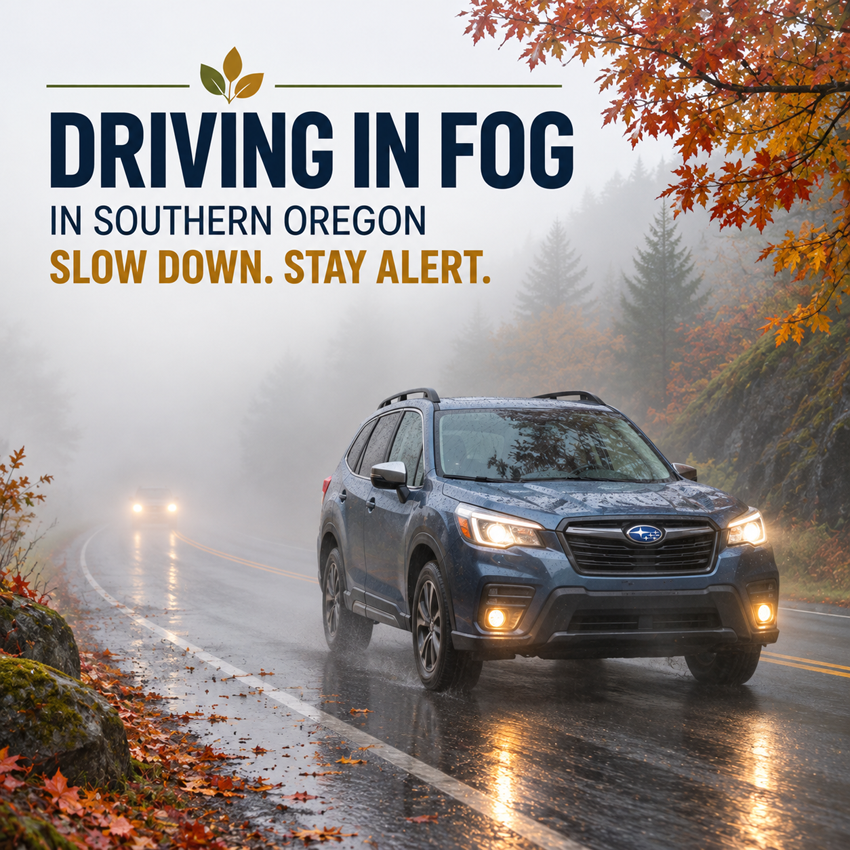
One stretch of road may be relatively clear, while another is blanketed in fog so dense that traffic lights, intersections, curves, and other vehicles seem to appear out of nowhere.
The important thing to remember is that safe driving in fog isn't just about how carefully you drive. It's also about anticipating what other drivers might do.
Here are some practical ways to protect yourself and everyone sharing the road.
Why Is Fog So Dangerous for Drivers?
Fog reduces the distance you can see ahead, giving you less time to recognize and react to hazards. A vehicle slowing for an intersection, a deer crossing the road, or a car entering from a side street may not become visible until you're much closer than expected.
In Southern Oregon, fog can be especially unpredictable during the fall and winter months. Cooler mornings, moisture in the air, and sheltered valleys can create conditions that change significantly over a short distance.
Even familiar roads deserve extra caution when visibility is limited.
7 Ways to Drive More Safely in Fog
1. Slow Down Before Visibility Becomes a Problem
The posted speed limit assumes reasonably safe conditions. When fog reduces visibility, you may need to drive considerably slower.
A good rule: Never drive faster than you can safely stop within the distance you can see ahead.
Avoid abrupt braking whenever possible. Reduce your speed smoothly and early, giving drivers behind you more time to react.
2. Use Low-Beam Headlights, Not High Beams
High-beam headlights can reflect off fog droplets, creating glare that makes the road even harder to see.
Instead:
- Turn on your low-beam headlights, even during daylight hours.
- Use fog lights when appropriate and permitted.
- Make sure your taillights are illuminated.
- Don't assume your daytime running lights automatically activate your rear lights.
Your headlights serve two purposes: helping you see the road and helping other drivers see you.
3. Increase Your Following Distance
Fog makes it harder to judge how quickly you're approaching another vehicle.
Leave significantly more space than you normally would between your Subaru and the vehicle ahead.
If that driver suddenly brakes for a hidden hazard, the extra distance may give you the time you need to stop safely.
Avoid following someone else's taillights too closely just because they provide a convenient reference point. Their speed may not be appropriate for the conditions either.
4. Pay Extra Attention at Intersections and Driveways
In dense fog, an approaching vehicle can be difficult to see until it's dangerously close.
Before turning or entering traffic:
- Look carefully in both directions.
- Allow extra time to judge approaching traffic.
- Avoid assuming another driver has seen you.
- Watch for vehicles entering from side streets, driveways, and parking lots.
Be especially cautious when crossing lanes of traffic or making left turns.
5. Avoid Sudden Maneuvers and Unnecessary Passing
Fog is not the time for aggressive lane changes, close following, or last-second turns.
Signal well in advance, brake gradually, and keep your movements predictable.
Use lane markings and roadside reflectors to help maintain your position, but keep looking ahead for vehicles, pedestrians, cyclists, and unexpected obstacles.
6. Keep Your Windows Clear and Your Attention on the Road
Fog outside your vehicle can be challenging enough without condensation or glare inside.
Before driving, make sure:
- Your windshield and windows are clean.
- Your defroster is working properly.
- Your headlights and taillights are clean.
- Your windshield wipers are in good condition.
- Your mirrors are adjusted correctly.
Avoid distractions and turn off cruise control in low-visibility conditions.
7. Know When It's Safer to Stop
Sometimes fog becomes so dense that continuing isn't worth the risk.
If you cannot see far enough ahead to drive safely, find a parking lot, rest area, or another location completely away from moving traffic.
Never stop in a travel lane.
If you must pull off the road because visibility has suddenly deteriorated, move as far from traffic as safely possible and use your hazard lights while stopped. Don't resume driving until conditions improve.
Remember: Not Every Driver Will Be as Cautious as You
This may be the most important consideration of all.
You can slow down, turn on your headlights, and maintain a safe following distance. Unfortunately, other drivers may still travel too fast, follow too closely, or drive without adequate lighting.
Defensive driving in fog means being prepared for someone else's mistake.
Here are a few situations to anticipate:
- A driver approaches rapidly from behind. Maintain a safe, predictable speed. Avoid accelerating just because someone is following too closely. When appropriate, allow them to pass at a safe location.
- An oncoming vehicle appears suddenly. Stay within your lane, watch the right edge of the roadway, and avoid abrupt steering corrections.
- Someone pulls out in front of you. Anticipate that drivers entering the roadway may have difficulty judging your distance and speed.
- A vehicle ahead stops unexpectedly. Maintain enough following distance to respond without sudden braking.
- A driver travels without headlights. Remember that some vehicles may be almost invisible until they are dangerously close.
The goal isn't to assume that other drivers are careless. It's to recognize that reduced visibility affects everyone's ability to make good decisions.
Does Subaru's All-Wheel Drive Help in Fog?
Subaru's Symmetrical All-Wheel Drive can help maintain traction when road surfaces are wet or slippery, conditions that sometimes accompany fog.
But all-wheel drive doesn't improve visibility or eliminate the need for appropriate speeds and sufficient stopping distances.
Subaru vehicles may also include advanced driver-assistance features such as EyeSight Driver Assist Technology. These systems can provide valuable assistance in appropriate conditions, but fog and poor visibility can limit their performance.
No vehicle technology replaces an attentive driver who adjusts to the conditions.
Before Your Next Foggy Morning
A few minutes of preparation can make a meaningful difference.
Check your headlights and taillights, keep your windshield clean, and make sure your wipers and defroster are ready for changing weather.
You can also check TripCheck for Oregon road conditions, traffic cameras, and travel advisories before leaving home.
And when heavy fog is forecast, consider allowing extra travel time or delaying your trip until visibility improves.
A Little Patience Can Make a Big Difference
Foggy mornings are a familiar part of living in Southern Oregon, but familiarity shouldn't lead to complacency.
Slow down. Give others room. Make yourself visible. Stay alert for unexpected hazards, and remember that not everyone sharing the road will respond to fog the same way you do.
Arriving a few minutes later is a small price to pay for arriving safely.
At Southern Oregon Subaru, we believe looking out for one another is part of being a good neighbor, whether we're helping you maintain your vehicle or sharing the road.
We are here for your road ahead.
Frequently Asked Questions About Driving in Fog
Should I use high beams when driving in fog?
No. High beams reflect off fog droplets and can produce glare that makes visibility worse. Use low-beam headlights instead.
Should I turn on my headlights during daylight hours when it's foggy?
Yes. Low-beam headlights help other drivers see your vehicle, and they generally activate your taillights as well.
How fast should I drive in dense fog?
There isn't one safe speed for every situation. Reduce your speed enough that you can stop within the distance you can clearly see ahead. If visibility becomes too poor to continue safely, find a safe location away from traffic and stop.
What should I do if someone is tailgating me in fog?
Keep your driving smooth and predictable. Don't speed up or brake abruptly in response. Maintain additional room ahead of your vehicle and allow the other driver to pass when it can be done safely.
Can Subaru EyeSight see through dense fog?
Not reliably. Fog and other conditions that interfere with camera visibility can reduce the effectiveness or availability of certain EyeSight functions. Drivers should always remain attentive and prepared to control the vehicle.
Does all-wheel drive make driving in fog safer?
All-wheel drive can help with traction on slippery roads, but it does not improve visibility or shorten stopping distances. Appropriate speed, clear visibility, good tires, and attentive driving remain essential.