

Distracted driving happens when a driver’s attention is taken away from the road by activities such as using a phone, eating, adjusting controls, or interacting with passengers.
Quick Answer
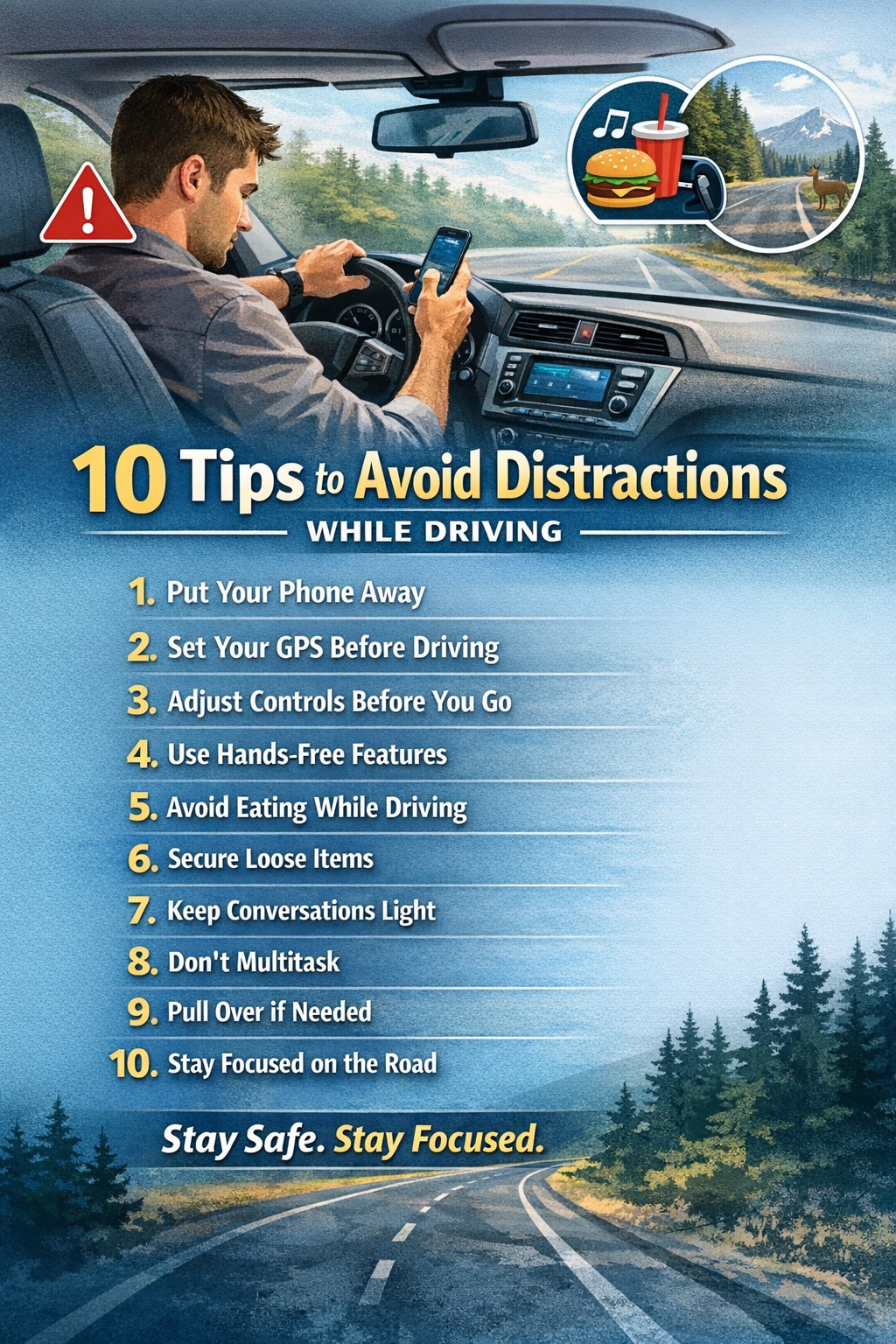
The best ways to avoid distractions while driving include putting your phone away, setting navigation before starting your trip, adjusting vehicle controls before moving, avoiding eating while driving, securing loose items in the vehicle, and pulling over if you need to send a message or make a call. Staying focused on the road helps reduce accidents and keeps drivers, passengers, and pedestrians safer.
Many of these habits are especially valuable for new drivers and teen drivers who are still building safe driving routines.
What Is Distracted Driving?
Distracted driving is any activity that takes your attention away from driving. This includes texting, talking on the phone, adjusting controls, eating, or interacting with passengers.
Even a few seconds of distraction can increase accident risk. At highway speeds, looking away from the road for five seconds means driving the length of a football field without watching traffic conditions.
10 Practical Ways to Avoid Distractions While Driving
1. Put Your Phone Out of Reach
Mobile phones are one of the most common driving distractions, particularly for new and teen drivers. Silence notifications or place your phone in the console or glove box before starting your trip.
2. Set Navigation Before You Start Driving
Entering an address or adjusting directions while driving takes your eyes off the road. Set your route before putting the vehicle in gear.
3. Adjust Mirrors, Climate, and Audio Before Moving
Take a moment to adjust mirrors, climate controls, and music before starting your trip. This prevents unnecessary distractions once you begin driving.
4. Use Hands-Free Features When Necessary
If a call cannot wait, use hands-free technology such as steering-wheel controls or voice commands to reduce manual distraction.
5. Avoid Eating While Driving
Eating behind the wheel often leads to spills or dropped items, which can cause drivers to take their eyes off the road.
6. Secure Loose Items in Your Vehicle
Loose objects such as phones, bags, or water bottles can slide around during turns. Store them safely before driving to prevent reaching for them while moving.
7. Keep Passenger Conversations Manageable
Passengers can help with navigation or spotting hazards, but intense conversations can distract drivers. Focus on the road when traffic conditions require attention.
8. Avoid Multitasking
Changing playlists, searching through bags, or reading notifications may seem minor, but they divide your attention and reduce reaction time.
9. Pull Over When You Need to Do Something
If you need to respond to a message, look up directions, or make a call, pull over safely before doing so.
10. Stay Mentally Engaged While Driving
Distraction can also be mental. Fatigue, stress, or daydreaming can reduce awareness. Staying alert and scanning the road helps maintain focus.
Why Avoiding Distractions Matters
Focused driving improves reaction time and helps prevent accidents. Removing distractions protects you, your passengers, and others sharing the road.
Safe driving habits also help create safer communities by reducing the risk of collisions involving other vehicles, cyclists, and pedestrians.
These Tips Are Especially Important for New and Teen Drivers
New drivers and teen drivers are still developing safe driving habits and may be more vulnerable to distractions. Learning early to keep phones out of reach, set navigation before driving, and stay mentally focused can help build strong safety habits that last a lifetime.
Parents can also help by encouraging new drivers to treat driving as a single task and avoid multitasking behind the wheel. Creating these habits early can significantly reduce the risk of distracted driving accidents.
Frequently Asked Questions About Distracted Driving
What is the most common driving distraction?
Mobile phones are the most common distraction. Texting, notifications, and social media frequently take drivers’ attention away from the road.
How dangerous is texting while driving?
Texting while driving is extremely dangerous because it combines visual, manual, and cognitive distraction at the same time.
How can drivers stay focused on the road?
Drivers can stay focused by putting phones away, preparing navigation before driving, limiting distractions inside the vehicle, and pulling over if they need to use their phone.
Are hands-free systems safer than handheld phones?
Hands-free systems reduce manual distraction, but drivers should still keep conversations brief and maintain full focus on driving.
Safe Driving Starts with Focus
Avoiding distractions is one of the simplest ways to make every trip safer. Small habits like putting your phone away and preparing your vehicle before driving can significantly reduce risk.
At Southern Oregon Subaru, we believe safe driving starts with awareness and responsible habits behind the wheel.